
What Tesla's Dual Recall Reveals About Automotive Execution Architecture
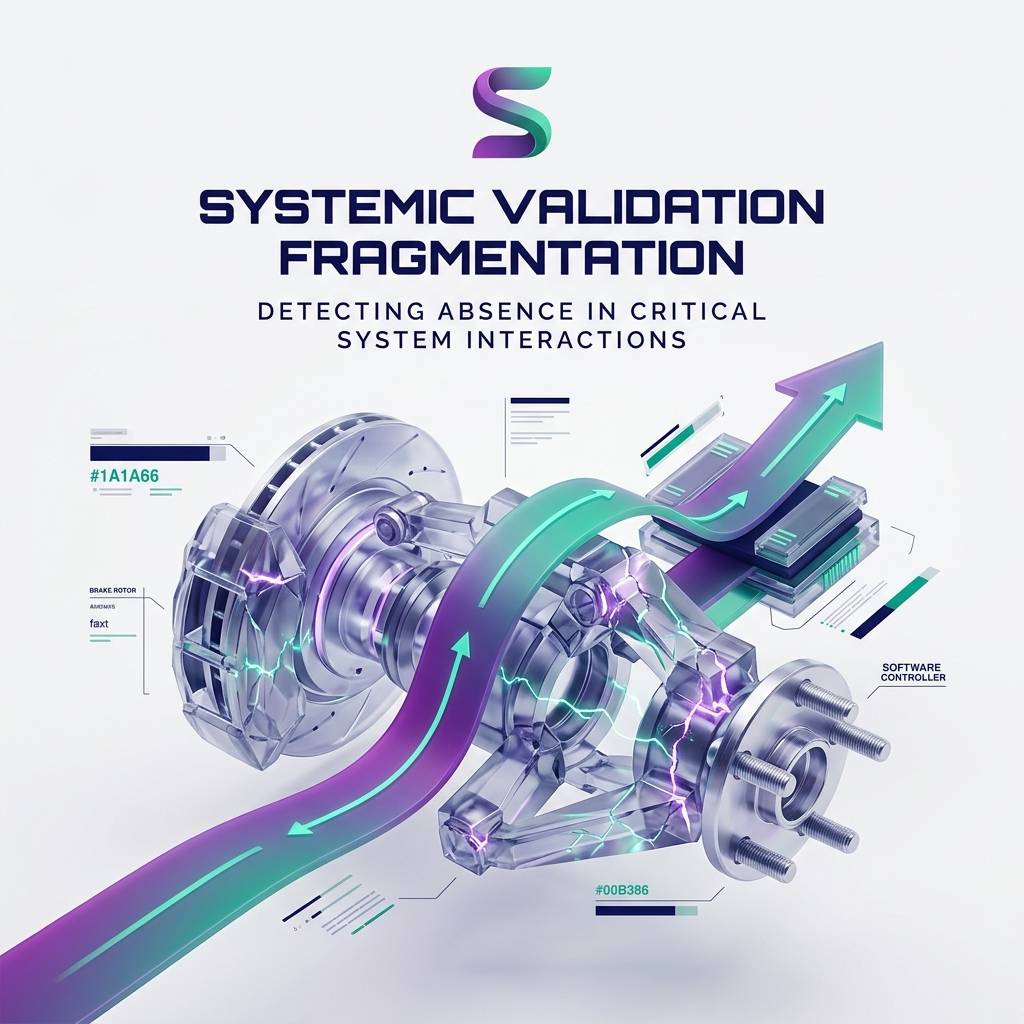
Tesla announced two recalls this week affecting nearly 219,000 vehicles. The first involves 173 Cybertrucks with optional 18-inch steel wheels, where cracked brake-rotor stud holes could allow wheel studs to separate, potentially causing a wheel to detach whilst driving. The second affects 218,868 Model 3, Model Y, Model S, and Model X vehicles with a rearview-camera software issue causing image lag after shifting into reverse, creating a temporary blind spot that could persist for up to 11 seconds.
Tesla states it knows of no crashes, injuries, or fatalities linked to either problem, though the company has identified a small number of warranty claims related to the wheel condition. The mechanical recall requires physical replacement of brake rotors, hubs, and lug nuts at Tesla service centres, whilst the software recall deploys an over-the-air update remotely, requiring no customer intervention.
These aren't isolated failures.
They're symptoms of a structural problem that extends far beyond Tesla, far beyond these specific vehicles, and directly into the validation architecture that supports multi-year development cycles across the automotive industry. The pattern emerging here reveals something more consequential than individual defects: it exposes the gap between component maturity and dependency maturity, between what organisations validate independently and what actually interacts dynamically in the field.
Two Recall Types, One Structural Gap
On the surface, these appear to be completely different failure modes requiring different responses. One involves mechanical components under thermomechanical stress in a wheeled assembly, the other involves software state transitions across distributed electronic control units. The repair mechanisms diverge entirely: physical parts replacement versus remote code deployment.
But trace them backwards through the development cycle, and the same root cause surfaces.
Delivery permission before dependency confidence.
For the Cybertruck wheel issue, reports indicate Tesla observed rotor cracking during pre-production testing and had planned durability improvements to address the weakness in the brake-rotor stud hole design. Those improvements were not incorporated when production began on 28 August 2025, reportedly due to what Tesla described internally as a "change management error." The knowledge existed, the fix was planned, the engineering solution was identified, but the execution layer disconnected somewhere between validation discovery and production implementation.
This wasn't a design failure.
It was a dependency tracking failure, where someone in the programme structure gave permission to start production before the dependency chain between identified risk and implemented mitigation had closed. The issue wasn't ignorance of the problem, it was the inability of the execution system to enforce dependency closure before launch authorisation.
For the camera issue, Tesla became aware of the problem on 10 April 2026 after an engineering vehicle running software version 2026.8.6 experienced the rearview display delay. Just one day later, the company began pushing software version 2026.8.6.1 to customer vehicles, demonstrating rapid operational capability to identify, patch, and deploy fixes across a distributed fleet.
The rapid response demonstrates operational capability.
But it surfaces a structural question: how did a delay of up to 11 seconds in a safety-relevant camera display reach customer vehicles in the first place, particularly when the behaviour should have been observable during state-transition validation testing months before software release?
The Illusion That Software Fixes Are Cheaper
The industry treats hardware recalls and software recalls as fundamentally different cost structures, and the economic data appears to validate that segmentation. Hardware-related recalls typically cost between $500 to $2,000 per vehicle when parts replacement, dealer labour, logistics, and programme management are factored in, whilst software-focused recalls average $300 to $500 per vehicle, primarily driven by engineering time, validation, and deployment infrastructure rather than physical components.
By 2028, automakers will save an estimated $1.5 billion annually using over-the-air update capabilities to address recalls, according to industry analysis, with the current cost of performing legally required software updates in person reaching approximately half a billion dollars annually across OEMs. The operational savings are measurable, the deployment velocity is real, and the customer friction reduction is substantial.
These figures mask a deeper cost.
The validation architecture that allows software issues to reach production in the first place carries costs that don't appear in recall expense calculations: delayed discovery penalties, accumulated technical debt, erosion of validation rigour, and the organisational psychology shifts that occur when post-launch fixes become normalised rather than exceptional. Over-the-air capability is operationally powerful, but organisationally it creates a subtle psychological transition from "software must be right before SOP" to "software can be corrected after SOP," and that shift changes validation culture not intentionally, but structurally.
Leadership sees no dealer visit required, low marginal deployment cost per vehicle, rapid patch rollout capability, and remotely recoverable fleets that can be updated overnight. The system begins tolerating more late software risk, more deferred edge-case validation, and more post-SOP issue closure assumptions because the perceived cost of late discovery has dropped whilst the perceived cost of delaying launch remains constant or increases.
The problem begins when organisations mentally classify software defects as "recoverable later" rather than "unacceptable at launch," which changes escalation thresholds in ways that ripple through gateway decision-making. Issues that previously would have blocked programme gates become acceptable with mitigation plans, deferred to post-SOP patch releases, or tracked as continuous improvement items rather than launch blockers.
Once that behaviour normalises across programmes, discovery starts shifting right.
Warranty Claims Are Late-Stage Signals of Early-Stage Gaps
As of 14 April, Tesla had identified three warranty claims potentially related to the Cybertruck wheel condition and initiated the recall "out of an abundance of caution," according to regulatory filings. Three claims might appear statistically insignificant across a fleet of 173 affected vehicles, but warranty data represents something more consequential than simple defect counting.
These are late-stage signals of early-stage gaps.
Field data arriving after production decisions were locked, after tooling was committed, after launch authorisation was granted. The absence detection system that should have triggered during validation didn't surface the issue until it reached customers, which indicates that the dependency between design intent, validation evidence, and launch readiness wasn't properly mapped or enforced.
When field data exists early but action happens late, it usually indicates one of several structural conditions. Signals were visible but disconnected, meaning the organisation saw symptoms across different reporting systems but not the structural relationship between them, so individual anomalies remained below escalation thresholds even as the pattern intensified. Ownership fragmentation slowed escalation because each team saw only its slice of the problem, rotor engineers tracking one set of data, wheel engineers another, with no cross-functional synthesis occurring at the programme level.
The system lacked propagation intelligence.
Nobody could model downstream impact, scaling behaviour, interaction risk, or architectural exposure with enough granularity to convert early weak signals into actionable programme risk. Risk thresholds became probabilistic instead of structural, where the decision framework shifted from "What does this signal imply architecturally?" to "How many incidents justify formal action?" which fundamentally changes how organisations respond to emerging uncertainty.
Field failures are almost never the true beginning of the problem.
They represent the first point where the system becomes observable externally, where the instability that existed during integration, during architecture convergence, during validation compromises, or during unresolved dependency interactions months or years earlier finally surfaces in a form that customers experience and regulatory bodies track. The recall isn't the start of the failure, it's the moment the organisation can no longer contain uncertainty inside its internal reporting structure.
The Pattern Extends Across the Industry
This pattern extends beyond Tesla. This is the company's 11th Cybertruck recall in the past two years, with Tesla issuing 16 recalls total in the U.S. in 2024 that applied to 5.14 million EVs, more than 40% of which pertained to the Cybertruck programme specifically.
But the escalation isn't isolated to one manufacturer.
Ford issued 94 recalls in 2025, more than any automaker in history for a single year, whilst four of the 10 largest recalls in 2025 were specifically for camera systems. In 2026 already, nearly 3 million vehicles have been recalled for camera images either failing to display or taking too long to display, affecting automakers including Ford, GM, and Toyota, with nearly all fixes deployed via software updates rather than replacement cameras.
This isn't isolated failure.
It's systemic validation fragmentation across distributed software systems, where legacy validation structures designed for mechanical components and deterministic hardware behaviour are breaking under the complexity load of software-defined vehicle architectures. The escalating recall frequency signals that the industry's validation architectures haven't scaled at the same rate as dependency complexity.
Why Conventional Validation Catches Issues Too Late
In the automotive industry, rigorous testing based on ISO 26,262 is carried out at various V-model stages, with design validation plans structured around component ownership, supplier deliverables, and gateway milestone completion. The process appears thorough on paper, with extensive documentation, test coverage matrices, and failure mode analysis conducted across subsystems.
But conventional validation of ECUs using hardware-in-the-loop testing is performed in late stages using big bang integration approaches.
This results in delayed feedback where defects discovered late in the cycle are expensive to remediate, lack of scalability as test environments struggle to replicate real-world state permutations, insufficient fault diagnosis because root causes are obscured by interaction complexity, higher development costs driven by rework and iteration, and delayed fault detection that pushes discovery right when the organisational bias is to push launch forward. Research into continuous integration failures found that software-related issues such as configuration problems, pipeline scripting errors, and dependency mismatches are a primary cause of CI system failures, not hardware defects or fundamental design flaws, but dependency errors that propagate through interconnected systems.
The industry's shift to software-defined vehicles amplifies dependency complexity faster than validation architectures adapt.
For the Cybertruck wheel issue, the missing validation likely centred on the wheel-hub-rotor clamp stack behaving as one structural system under load, where validation treated the stud, hub, wheel, and rotor as separate parts passing independent component tests rather than validating the clamped stack-up as a coupled load path under rough-road impact, cornering lateral loads, clamp-load variation, and thermomechanical durability over lifetime cycles. The core gap was that validation treated components independently rather than as an integrated system where interactions under dynamic loading create failure modes that don't exist in isolated component testing.
Organisations Built Around Ownership Boundaries, Not Physics Boundaries
Automotive development structures are usually organised around ownership boundaries rather than physics boundaries, which creates structural blindness to interaction behaviour that crosses organisational lines. The rotor team validates rotor durability, thermal cracking, NVH characteristics, and metallurgical properties within their domain. The hub team validates bearing loads, structural stiffness, and interface geometry within theirs. The wheel fastening team validates stud strength, nut retention torque, and preload consistency. The wheel supplier validates wheel fatigue life and radial-cornering load capability.
Each team completes their design validation plan, each subsystem passes its gate reviews, and programme reporting shows green status across components.
But nobody owns the cross-boundary question.
What happens when all these independently validated parts interact dynamically together over five years of real-world thermal cycling from brake heat, mechanical loading from rough roads and cornering forces, and preload variation from temperature changes and joint relaxation? That gap between component ownership and system behaviour is where many field failures originate, not because individual components failed their tests, but because the interaction wasn't validated as a coupled system.
Modern programmes optimise for parallel development that enables supplier independence, milestone velocity that maintains programme timing, and gateway completion that demonstrates progress to leadership, but not necessarily for cross-domain dependency computation that maps how changes in one domain propagate through interconnected systems. Validation becomes fragmented across ownership boundaries, and the organisation operates under an assumption that proves false in coupled systems: if every component passed validation independently, the integrated system must be safe.
Coupled systems don't work that way.
Interactions create entirely new failure modes that don't exist in component-level testing, where the system behaviour emerges from the coupling itself rather than from individual part weaknesses.
What Current Systems Fundamentally Miss
Current warranty systems, design validation plan tracking, and gateway reviews operate by asking whether items are complete, whether tests have passed, whether issues have been closed, and whether warranty claims have been properly coded in the system. The focus remains on outcomes and completion status rather than on structural dependencies and propagation paths.
An absence detection system would ask something fundamentally different.
What should exist here, given the architecture complexity, system maturity level, historical risk patterns, interface coupling density, and programme timing, but does not currently exist in the validation evidence or dependency map? That shift from tracking completed outcomes to detecting missing structural elements represents a fundamental change in how validation systems operate.
Missing dependency links
When camera ECU software changes to address one defect or add new functionality, the absence detection system should flag if no linked regression test exists for display wake-up timing under different power states, reverse gear engagement sequencing, power state transition behaviour, and HMI rendering priority conflicts. The absence isn't a failed test result, the absence is that no test was created for the interaction behaviour created by the change, which means the validation scope didn't expand proportionally to the dependency impact.
Missing system-level validation
When rotor, hub, wheel, and stud all have component design validation plans that pass gate reviews independently, but no clamped-stack thermomechanical validation exists that tests the coupled behaviour under combined thermal and mechanical cycling, each component appears green in programme tracking whilst the system interaction remains invisible. The gap between component maturity and interaction maturity creates risk that doesn't surface until field exposure.
Missing owners for cross-boundary behaviour
When a system has clearly defined owners for camera hardware, display hardware, middleware services, power management strategy, HMI rendering logic, and diagnostic reporting, but no single owner exists for the cross-boundary requirement that "rearview image becomes available within required time across all wake-sleep state transitions," the ownership gap creates an accountability vacuum where everyone assumes someone else is validating the end-to-end behaviour.
Missing escalation despite signal accumulation
When warranty claims, dealer technical reports, telemetry anomaly flags, and issue reopens all exist in separate data streams but none of them are linked into one propagation chain that computes cumulative risk, the absence detection system should flag that signals are increasing across related nodes whilst programme risk status remains unchanged, which indicates the organisation is seeing events but not computing their structural significance.
Missing regression logic after change
When a late software patch closes one defect but the change potentially affects boot timing sequences, memory load distribution, network traffic patterns, power state handling logic, and HMI arbitration behaviour, the absence detection system should flag if no downstream regression test set expands to cover the interaction surface created by the change, because change impact exists but validation scope didn't expand proportionally.
Missing evidence behind green status
When a gateway review shows green status for a subsystem, but the evidence graph underneath reveals unresolved dependencies, open assumption lists, no recent integration test execution, incomplete supplier maturity documentation, test coverage not mapped back to requirements, and no field-data feedback loop closed, the absence isn't a red flag in the tracking system, it's the gap between reported status and structural evidence. The system should detect not only bad events that occur, but expected artefacts that should exist given the programme state but are missing.
The One Absence That Would Have Prevented Both Failures
The single absence that, if detected early enough in the programme cycle, would have prevented both the mechanical wheel stud issue and the software camera delay from reaching production simultaneously points to a systemic gap rather than isolated oversights. That absence is the lack of forced system-level maturity reconciliation between physical architecture changes, software release maturity status, validation evidence completeness, and field-warranty signal patterns before production release authorisation.
For the rotor issue, the missing evidence was confirmation that the changed wheel-hub-rotor-stud stack configuration had been revalidated as a coupled load path under rough-road impact, cornering lateral loads, clamp-load variation from thermal cycling, and durability testing over projected lifetime. For the camera issue, the missing evidence was validation across the full vehicle-state dependency chain, covering reverse gear engagement sequencing, boot timing under different power states, display readiness confirmation, power state transition handling, ECU wake-up synchronisation, and hardware-version compatibility behaviour.
Different failure modes, same structural gap.
Component or feature maturity was allowed to progress through programme gates without computed dependency maturity, meaning individual subsystems could show green status whilst the coupled system behaviour remained unvalidated. An absence detection system operating at the programme level should have flagged that production intent existed and launch authorisation was approaching, but cross-domain dependency closure had not occurred, which represents a mismatch between delivery permission and dependency confidence.
Building Systems That Catch Absence Before Crisis
The real challenge in left-shifting discovery isn't moving testing activities earlier in the timeline, though that helps. It's moving structural visibility earlier, so the organisation can see dependency states, propagation paths, and interaction maturity with the same clarity it currently sees component completion status.
Late discovery rarely emerges from lack of effort, lack of intelligence, or lack of documented process. It usually emerges because the organisation cannot see the dependency structure clearly enough to understand how uncertainty propagates across the programme in real time, which means weak signals that should trigger escalation remain scattered across disconnected systems until they accumulate into field failures.
The strongest early signal isn't defect count rising or test pass rate declining.
It's rising integration uncertainty combined with stable programme reporting status, which creates a dangerous mismatch where open issues are increasing, reproduction consistency is declining, cross-functional ownership is blurring, integration environments are becoming unstable, late requirement interpretations are changing, and validation loops are repeating, yet gateway health dashboards still show green. That mismatch reveals the reporting system has detached from the actual dependency state of the programme, which is usually where late discovery begins forming.
By the time gateway reviews happen at later programme stages, commercial momentum already exists with tooling money committed, manufacturing plants preparing, suppliers ramping volume production, and leadership narratives established around launch timing. At that point, the organisation psychologically shifts from "Should we launch?" to "How do we launch safely enough?" which represents a fundamentally different operating mode where the real decision about launch readiness was made months earlier, structurally, before the final gateway convened.
Traditional programme governance structures track issue ownership assignment, milestone completion percentages, and component status levels, which provides visibility into procedural progress but often misses the instability that exists in interaction propagation behaviour, unresolved dependency chains, coupled state dynamics, and integration maturity variance across subsystems. Traditional automotive organisations struggle to see that gap, which explains why programmes often appear 90% complete operationally in dashboard metrics whilst remaining structurally fragile underneath in ways that only surface after launch.
Building Systems That Detect Absence Before Crisis
The organisations that navigate the next decade successfully in multi-year cycle industries won't necessarily be the ones that react fastest to recalls after they occur, though operational response capability matters. They'll be the organisations that build execution systems capable of detecting what's missing before it becomes a crisis, systems that map dependencies as rigorously as they currently map components, that validate interactions as thoroughly as they validate isolated parts, and that escalate uncertainty as aggressively as they escalate confirmed defects.
In multi-year cycle industries where early decisions create consequences that surface years downstream, the most expensive failures are the ones discovered after launch, when remediation costs multiply, when customer trust erodes, when regulatory scrutiny intensifies, and when the organisational learning loop is at its longest and weakest. The only sustainable way to prevent those late discoveries is to build absence detection into the execution architecture itself, not as an afterthought or supplementary tool, but as a structural requirement embedded in how programmes define readiness.
What if the question shifted?
Not whether components pass their individual validation tests, but whether the organisation can see what's missing in the dependency structure before it reaches customers. Not whether issues get closed in the tracking system, but whether the execution system can detect when component maturity progresses without corresponding dependency maturity. Not whether programmes hit their launch dates, but whether launch authorisation requires demonstrated dependency confidence rather than just delivery permission.
How would validation architecture need to change to make absence visible before it becomes crisis?
Comments ()